Single-Component vs Two-Component Waterborne Floor Coatings: Which System Is Better?
20 Years of Waterborne Coating Excellence
Single-Component vs Two-Component Waterborne Floor Coatings: Which System Is Better?
Nov. 19, 2026
Share:
Two-component waterborne coatings usually deliver higher abrasion, chemical, and moisture resistance, while single-component systems provide faster, simpler application. However, component count alone does not determine performance. Resin chemistry, dry-film thickness, surface preparation, environmental conditions, and expected traffic can change the result more than the difference between 1K and 2K packaging.
I use this guide to compare single-component vs two-component waterborne floor coatings for concrete floors, commercial facilities, warehouses, retail spaces, garages, and industrial environments. The comparison focuses on measurable selection criteria, including coating chemistry, film build, pot life, cure time, VOC content, moisture tolerance, chemical exposure, maintenance, and installation control.
!
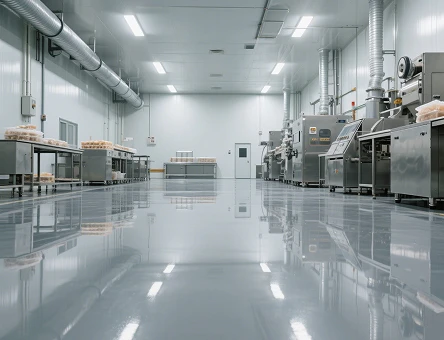
When I compare water-based concrete floor coatings, I begin with the exposure profile rather than the product label. A residential room may need low odor, simple cleanup, and a short recoat window, while a warehouse may require measured abrasion resistance, forklift traffic tolerance, and resistance to oils or cleaning chemicals. The correct choice also depends on whether the floor must remain partially occupied during installation.
The main evaluation criteria are floor coating durability and chemical resistance, application control, substrate condition, indoor usability, and total installed cost. I also separate the coating chemistry from the component count because a single-component waterborne urethane can outperform a poorly specified two-component epoxy in one use case, while a correctly installed two-component polyurethane can perform better under severe exposure.
| Coating alternative | Main chemistry | Best fit | Main trade-off |
|---|---|---|---|
| Single Component Floor Coating | One-component acrylic or urethane | Residential floors, light commercial areas, quick maintenance work | Lower resistance in severe chemical or abrasion exposure |
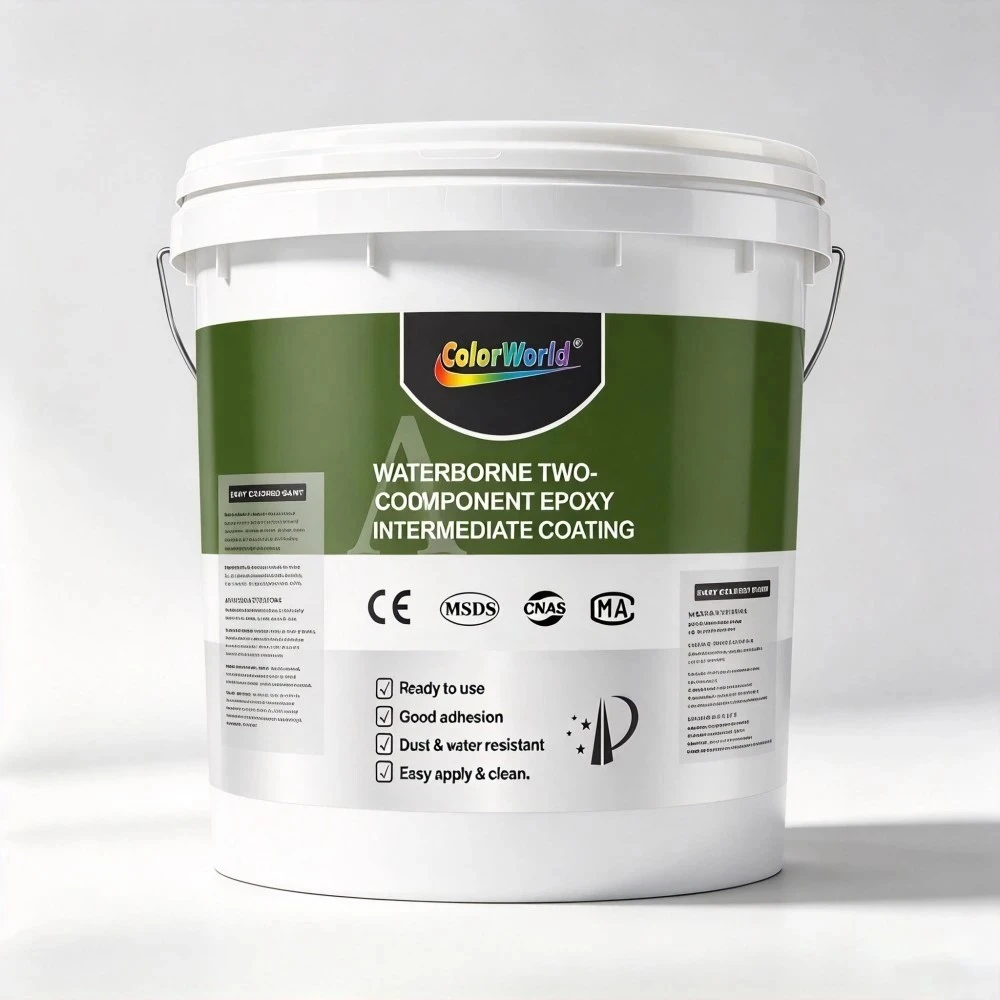
| Waterborne Two-Component Epoxy | Resin and hardener | Warehouses, workshops, garages, commercial concrete floors | Requires accurate mixing and controlled working time |
| Waterborne Two-Component Polyurethane | Resin and curing component | High-traffic commercial areas and demanding finish requirements | Higher installation complexity and stricter application control |
| Waterborne Acrylic-Urethane | One-component or hybrid system | Retail, offices, corridors, and occupied facilities | Performance depends strongly on resin blend and film build |
| Expanded supplier evaluation | Product system from a manufacturer such as NINGBO XUANWEI COLOR WORLD COATINGS, CO.,LTD | Projects requiring technical documentation, OEM options, or coordinated system supply | Product suitability must be confirmed through technical data and project testing |
A Single Component Floor Coating is supplied as one container and normally requires agitation, dilution only when permitted, and application within the stated environmental limits. I would consider this format where the project values low odor, easier cleanup, reduced mixing labor, and a short installation sequence. It is often suitable for residential concrete floors, offices, retail areas, corridors, and maintenance projects with light-to-moderate traffic.
The main advantage is process control at the jobsite. Because there is no separate hardener ratio, contractors have fewer opportunities to create an off-ratio batch, and unused material may be easier to manage within the stated storage period. The limitation is that many one-component systems develop their final resistance through water evaporation and coalescence, so high humidity, low temperature, or excessive film thickness can extend drying and reduce early durability.
Best suited to:
A waterborne two-component epoxy combines a resin component with a curing component immediately before use. The chemical reaction creates a crosslinked film that can provide stronger resistance to abrasion, oils, detergents, moisture exposure, and moderate chemical contact than many one-component acrylic systems. The result still depends on the product formulation, dry-film thickness, substrate profile, and cure conditions.
I would normally place this option above a one-component acrylic when a concrete floor receives forklifts, carts, pallet movement, repeated washing, or contact with lubricants. The contractor must measure the mixing ratio, observe the pot life, and apply the material before the working-time limit is reached. For example, a supplier may specify a pot life of 30–60 minutes at a defined temperature, but the actual value must come from the product technical data sheet rather than from a general category assumption.
Two-component epoxy is not automatically suitable for every industrial floor. Prolonged UV exposure can cause color change in some epoxy formulations, and rising substrate moisture can cause blistering, adhesion loss, or osmotic defects if the system lacks adequate moisture tolerance. I therefore require moisture testing, surface profiling, and a written recoat schedule before approving the system.
Waterborne two-component polyurethane is selected when the project requires a balance of abrasion resistance, flexibility, appearance retention, and chemical resistance. Compared with many epoxy systems, polyurethane topcoats may provide better resistance to some weathering conditions and can be used as part of a multi-layer floor system. The correct comparison is between complete systems, not isolated containers.
This alternative is more demanding during installation because component ratios, induction requirements, pot life, humidity, and film thickness can affect the final result. It may be appropriate for retail floors, hospitals, public corridors, showrooms, and commercial areas where cleaning frequency and visual consistency matter. It is less attractive for a small repair where the remaining mixed material may expire before the work is complete.
The central difference between 1K vs 2K waterborne floor coatings is how the protective film forms. A single-component coating is supplied ready for use and generally cures through water release, coalescence, oxidation, or a combination of mechanisms. A two-component coating contains a resin and a curing component that react after mixing, producing a chemically crosslinked film.
That distinction affects working time, cure development, and installation risk. A one-component system usually reduces preparation steps, while a two-component system requires accurate proportioning, mechanical mixing, pot-life management, and disposal planning. Neither format removes the need for a clean, profiled, dry, and structurally sound substrate.
| Decision factor | Single-component system | Two-component system |
|---|---|---|
| Mixing | Usually agitation only | Measured resin-to-hardener mixing required |
| Pot life | Often governed by container and drying behavior | Defined working time after components are combined |
| Early application | Simpler for small crews | Requires batch planning and trained installers |
| Abrasion resistance | Formulation-dependent; often suited to light or moderate traffic | Often higher when correctly formulated and cured |
| Chemical resistance | Suitable for routine cleaners and limited exposure | Usually preferred for oils, solvents, and repeated chemical contact |
| Moisture tolerance | Must be confirmed by product data | Must be confirmed; crosslinking does not solve vapor transmission |
| UV exposure | Acrylic and polyurethane grades may offer better color retention | Epoxy may require a UV-resistant topcoat outdoors |
| Downtime | Often shorter between application stages | May require longer cure and restricted access |
| Waste control | Easier for small repair quantities | Unused mixed material may become unusable after pot life |
Are two-component floor coatings more durable than one-component coatings? In many commercial comparisons, yes, particularly when the 2K system has a suitable resin chemistry, adequate dry-film thickness, and proper curing conditions. However, a two-component label does not establish a specific abrasion loss, chemical resistance rating, or service life without a test method and result.
For purchasing, I request values such as abrasion loss under a stated standard, adhesion strength, hardness, chemical immersion duration, water resistance, and recommended dry-film thickness. I also ask whether the test was performed on the actual system, including primer and topcoat, because a thin topcoat over a weak substrate may fail even when the coating itself has favorable laboratory data.
Traffic type matters as much as traffic volume. Pedestrian traffic, rubber tires, steel wheels, pallet jacks, forklift turning, impact loading, and abrasive dust create different failure mechanisms. For high-traffic areas, I would normally compare a two-component epoxy or polyurethane system against a one-component product only after confirming film build, repair method, curing schedule, and expected maintenance frequency.
Waterborne coatings reduce solvent odor and support easier water-based cleanup, but they are not independent of temperature and humidity. Low temperature can slow water release and chemical reaction, while excessive humidity can delay drying and create a surface that appears dry before the lower film has cured. The product data sheet should define the acceptable substrate temperature, air temperature, relative humidity, and dew-point separation.
Surface preparation is usually the most important installation variable. I would remove oil, laitance, curing compounds, dust, loose material, and incompatible coatings, then use mechanical abrasion, shot blasting, or another approved method to create a suitable profile. Concrete moisture should be measured with the specified test method, and active water intrusion or negative-side vapor pressure should be corrected before coating.
How long does waterborne floor coating take to cure? The answer depends on the product, film thickness, temperature, humidity, air movement, and substrate. A technical schedule should distinguish dry-to-touch, recoat time, light foot traffic, vehicle traffic, and full chemical cure, because these milestones can differ by several hours or days.
A single coating may not solve every floor requirement. A complete commercial or industrial system can include a moisture-tolerant primer, body coat, broadcast aggregate, intermediate coat, and UV- or chemical-resistant topcoat. This layered approach allows the specification to address adhesion, crack treatment, slip resistance, film build, appearance, and exposure separately.
This is where supplier capability becomes part of the comparison. NINGBO XUANWEI COLOR WORLD COATINGS, CO.,LTD presents waterborne single-component flooring, waterborne two-component epoxy flooring, outdoor coating categories, industrial flooring solutions, and customization services. I would treat those product categories as a starting point for technical review, then request the exact technical data sheet, safety documentation, batch information, application guide, and independently verifiable test results for the proposed floor system.
Before selecting a supplier, I recommend requesting the following information in writing:
A reasonable buying decision should compare material cost and installed cost separately. A cheaper one-component product may require more frequent recoating, while a two-component system may increase labor, mixing waste, and access restrictions during installation. I calculate total cost of ownership using material consumption, labor hours, downtime, repair frequency, cleaning requirements, and expected renewal interval rather than purchase price alone.
| If your priority is... | I would first evaluate... | Why |
|---|---|---|
| Simple application and limited traffic | Single-component acrylic or urethane | Fewer mixing steps and easier small-area maintenance |
| Warehouse or workshop traffic | Waterborne two-component epoxy | Better candidate for abrasion, oil, and repeated cleaning exposure |
| Commercial appearance and frequent cleaning | Two-component polyurethane or acrylic-urethane | Balances finish retention, traffic, and maintenance requirements |
| Outdoor or UV-exposed conditions | UV-rated polyurethane or acrylic system | Better starting point than unprotected epoxy in weather exposure |
| Occupied indoor areas | Low-odor waterborne system with short recoat schedule | Supports controlled installation with reduced odor impact |
| Damp concrete or vapor-prone substrate | Moisture-rated system after testing | Coating selection cannot replace moisture correction |
| Heavy industrial exposure | Multi-layer specified system | Primer, build coat, aggregate, and topcoat can address separate risks |
Single-Component vs Two-Component Waterborne Floor Coatings: Which System Is Better? The answer depends on exposure, installation control, substrate condition, and downtime requirements. I would choose a single-component system for light-to-moderate traffic, smaller repair areas, occupied interiors, and projects where simple application is the main requirement.
I would choose a two-component epoxy or polyurethane system when the floor faces frequent abrasion, chemical contact, vehicle traffic, repeated washing, or higher moisture exposure, provided the substrate and curing conditions are controlled. The final selection should be based on measurable data, including dry-film thickness, abrasion loss, adhesion, chemical resistance, pot life, cure milestones, VOC content, and moisture limits.
For contractors and commercial buyers, the safest process is to compare complete systems rather than isolated products. Confirm preparation requirements, perform a representative test area, document environmental readings, verify batch information, and calculate total installed cost before placing the order.
Get In Touch
Accurately Match Needs and Create Exclusive Solutions Your Needs, Our Expertise
LATEST NEWS