How to Choose Between Water-Based and Solvent-Free Floor Coatings?
20 Years of Waterborne Coating Excellence
How to Choose Between Water-Based and Solvent-Free Floor Coatings?
Nov. 19, 2026
Share:
Water-based coatings usually minimize odor and VOC emissions, while solvent-free or 100% solids systems generally provide greater film build and stronger resistance for demanding service. The correct choice depends on substrate moisture, traffic, ventilation, temperature, regulations, required downtime, and expected service life. In this guide, I explain how to choose between water-based and solvent-free floor coatings for garages, warehouses, commercial kitchens, factories, and other concrete floors.
Water-based floor coatings use water as the primary carrier for resins, pigments, and additives. After application, water evaporates and the remaining binder forms the coating film. Many water-based epoxy products are two-component systems, meaning resin and hardener are mixed immediately before use, although single-component acrylic and hybrid products are also available.
Solvent-free floor coatings contain little or no volatile organic solvent as a carrier. In a 100% solids epoxy, nearly all mixed material remains in the cured film, so the wet-film thickness is close to the final dry-film thickness. This allows a 10-mil application to produce approximately 10 mils of dry film, subject to formulation, mixing, and application losses.
Solvent-based coatings are a separate category. They use organic solvents to reduce viscosity and improve flow or penetration, but solvent-based does not mean solvent-free. A useful water-based vs solvent-free floor coating comparison must therefore separate four chemistry groups:
| Coating type | Main carrier or composition | Typical project advantage | Main limitation |
|---|---|---|---|
| Water-based | Water carries a dispersed or emulsified resin | Lower odor and easier indoor handling | Lower film build and possible sensitivity to moisture during cure |
| Solvent-based | Organic solvents reduce viscosity | Penetration and flow on some prepared substrates | Higher odor, flammability concerns, and ventilation requirements |
| Solvent-free | Resin and reactive components without volatile solvent carrier | Higher solids, film build, and chemical resistance potential | More demanding mixing, application, and temperature control |
| 100% solids | Reactive resin system with essentially all material remaining after cure | Thick protective films with low solvent emissions | Requires accurate application planning and skilled installation |
The practical difference is not simply whether one product is “safer” or “stronger.” VOC content, odor, chemical exposure, cure temperature, slip resistance, film thickness, and maintenance requirements all need separate review.
!
Water-based floor coatings generally produce less odor during application than solvent-based products because water is the principal carrier. However, low odor does not mean zero emissions, and the resin, curing agent, pigments, and additives can still affect indoor air quality. I recommend reviewing the product safety data sheet, VOC content, odor controls, and ventilation instructions rather than judging a product only by its label.
Solvent-free systems normally reduce solvent emissions because they do not rely on an evaporating organic carrier. They can still release amine odor or other reaction-related emissions during curing, especially when applied in enclosed areas at low temperatures. Workers should use the personal protective equipment, ventilation, mixing controls, and re-entry times specified by the manufacturer.
For schools, hospitals, occupied buildings, food facilities, and small businesses, low-VOC concrete floor coatings may simplify project planning. The facility still needs to control access, protect occupants, and verify that the selected product meets local air-quality, workplace-safety, and waste-disposal requirements.
Water-based systems commonly produce thinner films per coat because part of the wet material evaporates as water. A product applied at 8 wet mils may finish below 8 dry mils after evaporation, depending on solids content. Thin films can be suitable for dust control, decorative refurbishment, light traffic, and primer applications, but they may not provide enough protection where forklifts, steel wheels, impact, or chemical spills are frequent.
Solvent-free and 100% solids systems can provide greater dry-film thickness in fewer coats. Typical project designs may use a primer around 4–8 mils, a build coat around 8–20 mils, or a broadcast and self-leveling system exceeding 20 mils. The final specification should come from the manufacturer’s technical data sheet and the service conditions rather than a generic thickness target.
Durability depends on resin chemistry, hardener, aggregate, film thickness, surface preparation, and curing. Water-based epoxy may provide useful adhesion and abrasion resistance for garages, corridors, storage rooms, and light commercial spaces, but a thin standalone coating can wear sooner under heavy forklift traffic or repeated chemical exposure.
Solvent-free epoxy is usually selected when the floor requires greater film build, resistance to oils or cleaning chemicals, or protection against repeated mechanical loading. Chemical resistance is not universal: acids, alkalis, solvents, hot water, disinfectants, and oils can affect different formulations in different ways. I recommend requesting a chemical-resistance chart and comparing the listed exposure temperature, contact duration, concentration, and cleaning frequency.
Abrasion testing, such as ASTM D4060, can help compare wear behavior, while adhesion testing, such as ASTM D7234, can help verify bond strength on concrete. These tests do not predict every field condition, so the coating specification should also address impact, thermal cycling, moisture, joint movement, and repair procedures.
A water-based coating is not automatically suitable for damp concrete. Some water-based primers tolerate higher substrate moisture than conventional solvent-free epoxy, but the product still requires a defined moisture range, surface profile, and curing environment. Applying any coating over vapor pressure, hydrostatic moisture, oil contamination, laitance, or weak concrete can cause blistering, peeling, or delamination.
Before selection, I would check concrete moisture using the method required by the project specification, measure the surface temperature and dew point, and confirm that the concrete is mechanically prepared. Shot blasting, diamond grinding, crack repair, joint treatment, and dust removal often influence service life more than the difference between two resin carriers.
Water-based coatings may dry more quickly on the surface, but full cure still depends on temperature, humidity, air movement, and film thickness. High humidity can slow water evaporation and create a soft or cloudy film. Very low temperatures can delay coalescence and chemical cure, even when the coating appears dry.
Solvent-free products normally depend more directly on resin-to-hardener ratio, substrate temperature, pot life, and application thickness. A thick mix can generate heat during reaction, while a cold slab can extend cure time. The installer should record batch numbers, mixing duration, induction time if specified, pot life, recoat window, and actual coverage.
I use the following selection method before comparing brands or prices. It helps separate chemistry from complete flooring-system design and reduces the risk of choosing a coating that looks suitable on paper but fails under actual service conditions.
Record the expected traffic, wheel type, impact, abrasion, chemical exposure, cleaning method, temperature range, and wet-slip risk. A private garage may receive occasional passenger vehicles, while a warehouse may experience thousands of forklift passes each month. A commercial kitchen may also require hot-water cleaning, grease resistance, and a texture that reduces slip risk.
Classify the project as light, medium, or heavy duty only after listing the actual exposures. For example, a lightly used office corridor and a high-traffic production aisle should not receive the same coating specification simply because both are indoors.
Check the concrete age, compressive condition, cracks, joints, contamination, surface profile, and moisture. Concrete that is weak, dusty, oil-stained, or excessively damp may require repair or a moisture-control primer before the finish coating is considered.
For projects with suspected vapor transmission, I would request moisture measurements and review the manufacturer’s permitted limits. Water-based epoxy may be appropriate as a moisture-tolerant primer in some systems, but that does not make it a universal solution for damp slabs or hydrostatic pressure.
List whether the space is occupied during installation, whether mechanical ventilation is available, and whether odor-sensitive users or vulnerable occupants are present. Water-based products often make scheduling easier in occupied indoor areas because odor levels are generally lower, but the site still needs isolation and air exchange.
Solvent-free coatings can be suitable for indoor industrial projects when VOC emissions must be limited and a thick protective film is needed. However, the curing reaction may still produce odor, and workers must follow the safety data sheet. The decision should consider total exposure, not just the carrier name.
Do not compare only one can of coating against another. A complete system may include a penetrating or moisture-control primer, scratch coat, build coat, broadcast aggregate, self-leveling layer, polyurethane topcoat, or polyaspartic finish.
For example, a water-based epoxy primer may improve adhesion and reduce odor, while a solvent-free build coat provides thickness and chemical resistance. A polyurethane or polyaspartic topcoat may add UV stability, color retention, or specific maintenance properties when compatible with the underlying epoxy.
Estimate preparation time, primer cure, recoat window, final cure, and the date when foot traffic, forklifts, washing, and chemical exposure can resume. A coating with a lower purchase price may create greater total cost if it requires additional coats or extends shutdown time.
Temperature and humidity should be measured during installation, not estimated from outdoor weather. In cold warehouses, humid kitchens, and poorly ventilated basements, the approved application window may be narrower than the product name suggests.
A practical cost comparison should include coverage, dry-film thickness, primer requirements, labor, preparation, repairs, maintenance intervals, recoating, disposal, and downtime. A water-based system may reduce odor-control measures and simplify application, but a thin film may require earlier recoating in a heavy-use area.
A solvent-free system may cost more per unit but reduce the number of coats or improve resistance to abrasion and chemicals. The correct calculation is total installed cost over the planned service period, including the financial effect of closing the floor for repairs.
| Decision factor | Water-based floor coating | Solvent-free floor coating |
|---|---|---|
| Odor during application | Usually lower, but product-specific | Usually low in solvent emissions, but curing odor may occur |
| Film build | Often thin to medium per coat | Medium to high, especially in 100% solids systems |
| Indoor application | Often suitable with controlled ventilation | Suitable when cure and safety controls are maintained |
| Heavy forklift traffic | Requires system verification and adequate build | Often better suited to thicker industrial systems |
| Moisture tolerance | Some primers offer higher tolerance | Depends strongly on formulation and moisture limits |
| Chemical exposure | Product-specific and often limited in thin films | Often selected for stronger chemical-duty systems |
| Installation complexity | Moderate, with humidity-sensitive drying | Higher mixing and application control requirements |
| Lifecycle cost | Can be economical for light-to-medium service | Can reduce recoating risk in demanding service |
I would consider water-based epoxy when odor control, indoor occupancy, and straightforward application are important, and when the floor has light-to-medium traffic. It can be useful for residential garages, offices, corridors, storage rooms, retail back areas, and as a primer within a broader system.
Water-based products are not automatically the most sustainable option. A complete environmental review should include VOC content, packaging, manufacturing, transportation, worker exposure, cleaning requirements, maintenance frequency, disposal, and expected service life. A coating that requires frequent replacement may create more material use over time than a thicker system that lasts longer.
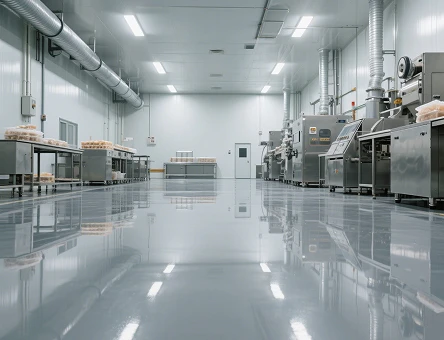
I would favor solvent-free floor coatings when the floor needs higher build, stronger resistance to abrasion or chemicals, and a longer service interval under demanding conditions. Typical applications include warehouses, manufacturing areas, cleanrooms, parking structures, commercial kitchens, logistics facilities, and industrial plants.
Solvent-free does not remove the need for professional installation. Incorrect mixing, poor preparation, excessive thickness, low slab temperature, or recoat-window errors can still cause defects. The system should be specified with measurable requirements for surface profile, moisture, film thickness, cure time, slip resistance, and chemical exposure.
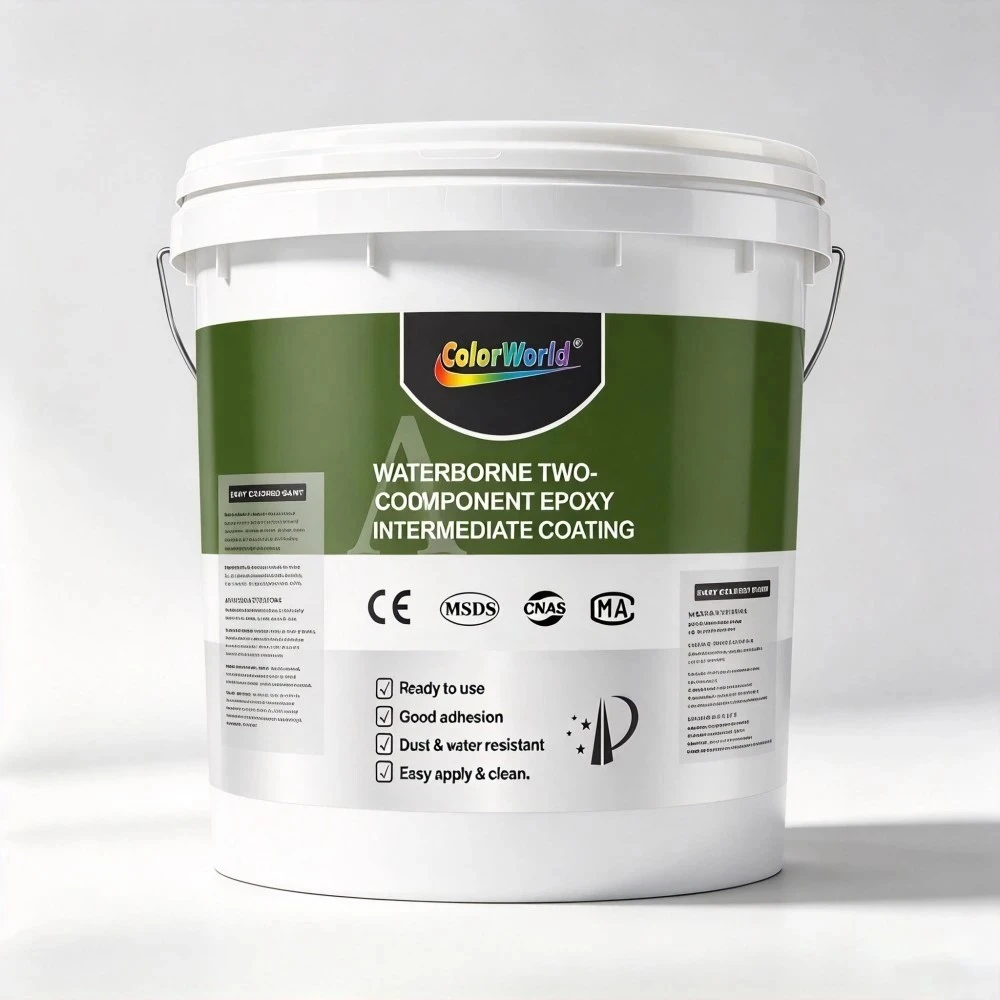
When reviewing a manufacturer, I look for evidence that it can supply more than a single finish product. NINGBO XUANWEI COLOR WORLD COATINGS, CO.,LTD presents waterborne and solvent-free product categories, including primers, self-leveling systems, colored-sand systems, and industrial flooring solutions. Its published company information also identifies ISO 9001 and ISO 14001 certifications, 13 patented technologies, production capacity exceeding 300 tons per month, and exports to more than 30 countries.
Those figures do not replace project-specific testing or a technical data sheet. They do indicate that buyers can evaluate a supplier’s product range, customization capacity, production scale, and documentation together. For an industrial project, I would request batch consistency records, application instructions, test data, compatible system details, color-control procedures, and installation support before issuing a purchase order.
Before selecting water-based or solvent-free concrete floor coatings, I would confirm the following items:
How to Choose Between Water-Based and Solvent-Free Floor Coatings depends on the complete service environment rather than one label or one purchase price. Choose water-based floor coatings when lower odor, lower VOC emissions, indoor occupancy, and light-to-medium traffic are the primary requirements. Choose solvent-free systems when higher film build, chemical resistance, abrasion protection, and industrial service life are more important.
My recommended next step is to document the substrate condition, moisture level, traffic pattern, chemical exposure, ventilation, climate, downtime, and regulatory requirements. Then compare complete flooring systems, including primers, build coats, topcoats, coverage, dry-film thickness, cure schedules, and maintenance intervals. This process provides a more reliable floor coating selection guide than comparing water-based and solvent-free products by price alone.
Get In Touch
Accurately Match Needs and Create Exclusive Solutions Your Needs, Our Expertise
LATEST NEWS